Essential Snake Identification Tips for Dog Owners in Queen Creek
Snake Bites in Arizona
In the desert environment of Arizona, snakes are a common sight, and not all of them are harmless. The distinction between venomous and non-venomous snakes is crucial for ensuring the safety of both humans and their canine companions.
Identifying venomous snakes in Arizona, like rattlesnakes, alongside their non-venomous counterparts is key to preventing dangerous encounters and ensuring that your adventures in Arizona’s great outdoors remain safe and enjoyable for you and your dog.
Venomous Snakes in Arizona
The number of rattlesnake species lurking in the shadows and sprawling in the hot Arizona sun may shock you.
Western Diamondback Rattlesnake
The Western Diamondback is one of the most commonly encountered snakes in Arizona. They can be found throughout the entire state in nearly every terrain.
Identifying features:
- Overall color brown or gray
- White and black striped tail
- White-lined diamond pattern on the back
- Rattle
- 3-4’ length
Dangerously venomous? Yes.
Is snake fencing effective? Yes.
Western Diamondback Rattlesnake
Western Black Tailed Rattlesnake
The Western Black-Tailed rattlesnake is commonly found in mountainous locations and the surrounding foothills. They can be found in the desert, but they are less likely to be found here. These snakes may also be found in tourist locations including Sedona and Phoenix.
Identifying features:
- Mostly brown with yellow, orange, and green tint
- Solid black tail area near the rattle
- Rattle
- Length up to 4’
Dangerously venomous? Yes.
Is snake fencing effective? Yes.
Western Black-Tailed Rattlesnake
Tiger Rattlesnake
This species is often found near the Speckled Rattlesnake. They’re not encountered as much as other species, but do tend to be found primarily in the Phoenix area.
Identifying features:
- Grey with shades of pink, orange, or brown
- Head is abnormally smaller than other species
- Larger rattle than other species
- Distinguished banding
- 2.5’ length
Dangerously venomous? Unusually potent venom.
Is snake fencing effective? Yes.
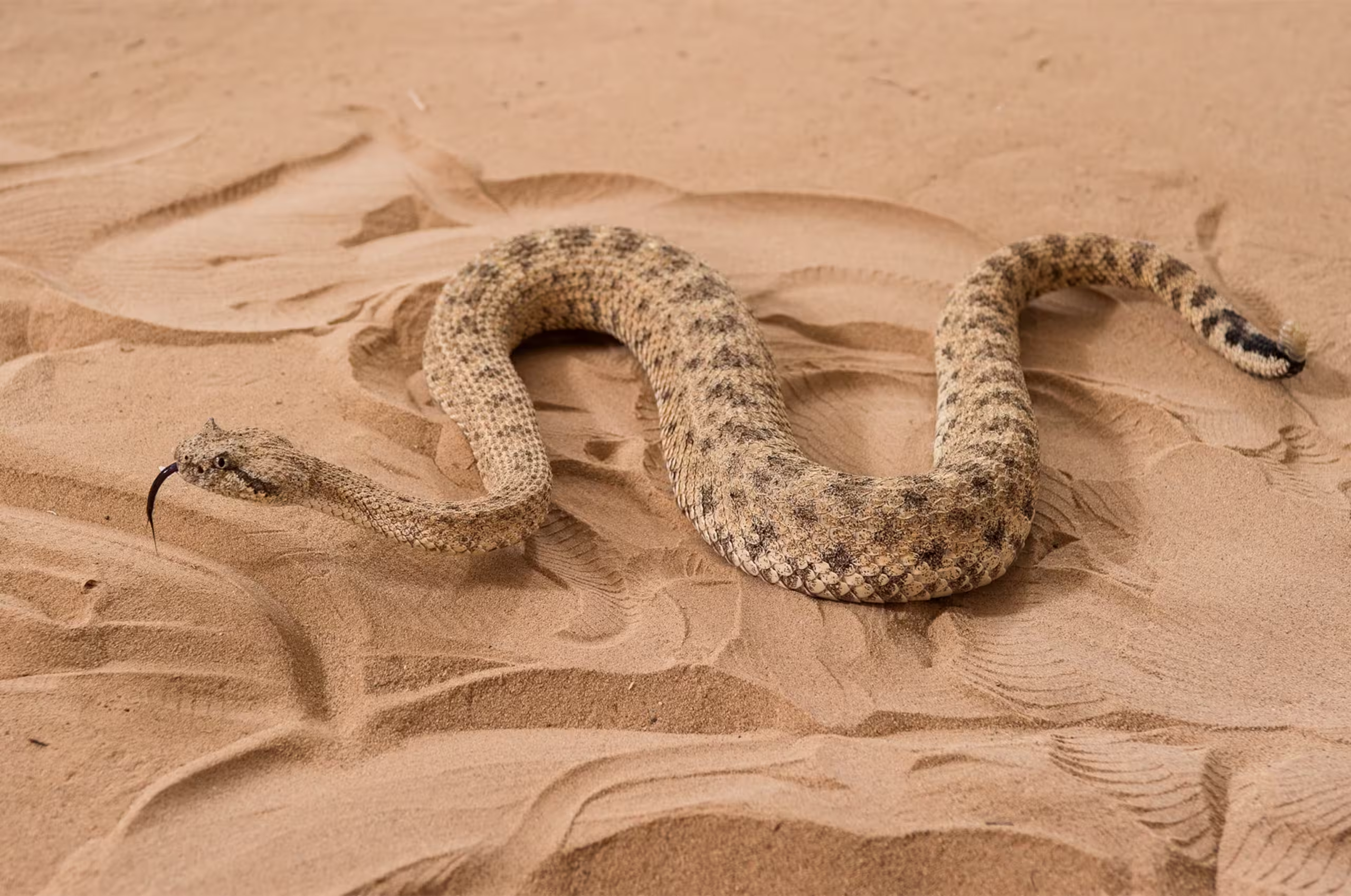
Sidewinder
The Sidewinder gets their name from exactly how it sounds; their unique sideways method of movement. They’re extremely common in Arizona, but they tend to stay to themselves more than other species. The Sidewinder prefers flat desert areas and often steer clear of mountains and rocky terrain.
Identifying features:
- ‘Horns’ above their eyes
- Unique movement pattern helps reduce contact with the hot sand
- Adults reach 2’
Dangerously venomous? Unusually potent venom.
Is snake fencing effective? Yes.
Southwestern Speckled Rattlesnake
This snake prefers rocky areas like mountains or hillsides. They’re most common in the South Mountain area, Camelback Mountain area, and the valleys nearby.
Identifying features:
- Vary in color from white/gray, brown, or orange/red
- Granite-type pattern on body
- Length around 2’
- Rattle
Dangerously venomous? Yes.
Is snake fencing effective? Yes.
Southwestern Speckled Rattlesnake
Mojave Rattlesnake
Often called the Mojave green, this snake is common in flat, sandy areas. They’re ridiculously defensive and more likely to bite than others.
Identifying features:
- Distinct diamond pattern with little speckling
- Striped tail
- Approximately 4’ in length
Dangerously venomous? Yes.
Is snake fencing effective? Yes.
Arizona Black Rattlesnake
The Arizona Black Rattlesnake prefers wooded areas at high latitude locations. They’re most commonly found in the mountains of Phoenix.
Identifying features:
- Juveniles: Tan or gray with brown circles along their back
- Adults: Deep brown or fully black
- Thick body
Dangerously venomous? Yes.
Is snake fencing effective? Yes.
Twin-Spotted Rattlesnake
The Twin-Spotted Rattlesnake is one of the smallest rattlesnakes found in Arizona. This snake has protected status. They prefer altitudes ranging from 6,000 to 11,000 feet so, fortunately, you likely won’t encounter one unless you’re specifically searching for one.
Identifying features:
- Grey, blue-grey, or tan
- Small rattle that sounds similar to an insect buzzing
Dangerously venomous? Yes.
Is snake fencing effective? Not necessary due to habitat location.
Banded Rock Rattlesnake
This species is commonly encountered, but special care must be taken as they are protected. They can be found in rocky areas, canyons, and wooded areas.
Identifying features:
- Grey base color
- Black bands that sometimes have a teal or green outline
Dangerously venomous? Yes.
Is snake fencing effective? Not necessary due to habitat location.
Arizona Ridge Nosed Rattlesnake
This protected species is Arizona’s state reptile. They have also become the rattlesnake chosen to teach children about venomous snakes in public school. As far as where they can be found in the wild, they prefer elevations above 4,000’ and are often found in grassy locations.
Identifying features:
- Brown base color
- Combination of light brown and dark brown spots
- 2’ length
Dangerously venomous? Yes.
Is snake fencing effective? Not necessary due to habitat location.
Arizona Ridge Nosed Rattlesnake
New Mexico Ridge-Nosed Rattlesnake
There aren’t many of these snake species left in Arizona. In fact, they aren’t expected to survive in the wild much longer due to fire, climate change, and habitat loss overall. They’re the rarest snake in the state and are federally protected.
Identifying features:
- Grey or light tan
- Unusual facial shape
- 2’ length
Dangerously venomous? Yes.
Is snake fencing effective? Not necessary due to habitat location.
New Mexico Ridge-Nosed Rattlesnake
Great Basin Rattlesnake
The Great Basin rattlesnake is widespread, not only being found in Arizona, but also California, Nevada, Nevada, Oregon, Idaho, and Utah. They can be found up to 8,000 feet in elevation, but are often found in the North Western Great Basin and Arizona Strip.
Identifying features:
- “Smudge” in their head
- May be yellow, black-and-white, brown, grey, or even a patternless black and gold
- 3’-3.5’ but have been found up to 5’
Dangerously venomous? Yes.
Is snake fencing effective? Yes.
Grand Canyon Rattlesnake
The Grand Canyon rattlesnake is commonly found in rocky terrains in Northern Arizona. Specific areas to watch for them include Glen Canyon and the Paria River Drainages.
Identifying features:
- Tan, yellowish, or pink
- Irregular blotches along their back with a dark brown outline
- Prominent when young but fades in color with age
Dangerously venomous? Yes.
Is snake fencing effective? Yes.
Prairie Rattlesnake
The Prairie Rattlesnake, or Hopi Rattlesnake, is commonly found in Arizona. This species is one of the most well-known rattlesnakes in the world.
Identifying features:
- Color varies based on habitat area
- Range from orange and red to green, tan, or brown
- Narrow light-colored facial stripes
- Bow-tie shaped dorsal blotches
- Can be found in every habitat type but prefer elevations between 4,500’ to 9,000’
- Length up to 5’
Dangerously venomous? Yes.
Is snake fencing effective? Yes.
Sonoran Coral Snake
The Sonoran Coral Snake is highly venomous but aren’t spotted frequently. It’s still important to be cautious keeping in mind the ‘red-touch-yellow’ phrase isn’t always reliable.
Identifying features:
- Black face
- Black and red bands combined with white or yellow stripes
- Can be as slender as a pencil
- Approximately 2’ in length
Dangerously venomous? Yes.
Is snake fencing effective? No.
Vaccines and Anti-Venom for Snake Bites
The rattlesnake vaccine for dogs is designed to help reduce the severity of symptoms and the amount of antivenom needed if a dog is bitten by a venomous rattlesnake. While antivenom is a critical treatment option, it can often be scarce and expensive, making prevention through vaccination a more reliable and cost-effective strategy.
Non-Venomous Snakes in Arizona
Alongside its notorious array of venomous snakes, Arizona is also home to numerous non-venomous species, including:
- Gopher Snake: Commonly encountered, defensive snake that reaches up to 5’ in length.
- Glossy Snake: A non-venomous, smooth-scaled snake that is often mistaken for a rattlesnake due to its coloration.
- Sonoran Mountain Kingsnake: Known for its striking red, black, and white bands, this non-venomous snake mimics the venomous Coral Snake’s coloration for defense.
- California Kingsnake: A powerful constrictor that is immune to rattlesnake venom and preys on other snakes.
- Desert Kingsnake: Typically found in arid habitats, this snake preys on other reptiles and rodents, using constriction to subdue its prey.
- Desert Nightsnake: Commonly encountered snake that primarily feeds on lizards and their eggs.
- Chihuahuan Nightsnake: Found in rocky areas, it uses mild venom to subdue small prey, primarily focusing on lizards.
- Rosy Boa: One of the few boa species native to the United States, known for its attractive rosy-pink belly and docile nature.
- Three-Lined Boa: This rare and elusive snake displays distinctive three longitudinal stripes along its body.
- Western Groundsnake: A small, docile snake often found in garages, in boxes, or near rocky areas.
- Banded Sandsnake: Not commonly seen, this snake uses its light and dark bands to blend into sandy environments.
- Shovel-Nosed Snake: Recognizable by its shovel-shaped snout, this snake burrows in sandy soils and preys on insects.
- Long-Nosed Snake: Marked by its long snout and colorful patterning, it is non-venomous and feeds on rodents and lizards.
- Patchnosed Snake: These non-venomous snakes are often found basking along dirt roads in the early mornings.
- Leafnosed Snake: Known for its leaf-shaped snout, used for burrowing in the desert sand.
- Coachwhip: A very fast and active snake that “whips” through grasslands and preys on lizards, birds, and rodents.
- Racer: Known for its incredible speed and agility, this snake captures prey by swift pursuit.
- Gartersnake: Commonly found near water sources, it preys on fish and amphibians and is known for its striped pattern.
- Black-Headed Snake: A small snake with a distinctive black head, known for eating centipedes and other small invertebrates. Important note; finding these snakes in the home could be a sign of termites.
- Hook Nosed Snake: Named for its upturned snout, this small snake uses its nose to dig in sandy soils.
Make an Appointment for the Rattlesnake Vaccine
To protect your dog from these hazards, consider getting the rattlesnake vaccine at Revel, which is designed to offer an added layer of protection against snake bites. At Revel, we use fear-free veterinary practices to ensure that your dog’s vaccination experience is as stress-free and comfortable as possible, focusing on your pet’s emotional and physical well-being throughout the visit.
For further reading, we recommend:
Arizona Snake Identification and Questions | Facebook
Ask the Naturalist | Rattlesnakes vs. Gopher Snakes – Bay Nature
How to Tell if a Snake is Venomous | Color, Eyes, Head