What To Do If Your Dog Has a Chipped Tooth
Dogs don’t exactly go easy on their teeth. They gnaw on tough bones, chomp on toys, and chew their kibble as quickly as possible. So it isn’t all that surprising to realize your dog has chipped a tooth.
Still, a chipped tooth is not an issue to ignore or take lightly. If left untreated, it can become infected, leading to potential health complications for your furry friend.
Knowing what to do when your dog has a chipped tooth can help you prevent further issues and get them back to their happy, tail-wagging self. When in doubt, contact Revel Vet for guidance; we’d be happy to advise you.
Different Types of Chipped Teeth in Dogs
Understanding the different types of chipped teeth can help you understand the severity of this issue. Some teeth present more of a problem when chipped than others. Also, the degree of the fracture can affect the potential risks and consequences for your pup.
Here’s what you need to know about the different types of chipped teeth.
- Enamel fracture: The enamel is the thin outer coating of the tooth. It can fracture, crack, or break when your dog chews on something hard. This type of fracture is usually minor, but it still requires intervention from your vet to smooth the rough surface of the tooth and ensure that the layer under the enamel (the dentin) is not exposed.
- Uncomplicated crown fracture: Slightly more severe than an enamel fracture, an uncomplicated crown fracture occurs when the damage is isolated to the tooth and does not extend into the pulp. This type of fracture can make the tooth more susceptible to future breakage, which could eventually expose the pulp. Your vet can determine whether treatment is necessary.
- Complicated crown fracture: This fracture extends into the pulp, or the soft tissue in the center of the tooth. This is the area that contains nerves, so a complicated crown fracture can be very painful for your dog. Neglecting this exposed tooth pulp can damage the tooth’s structure, potentially requiring removal.
- Root fracture: A root fracture is typically the most complicated type of chipped tooth. It involves the portion of the tooth below the gumline that extends into the jawbone. This type of fracture can happen when dogs chew on hard toys or bones or after a tooth extraction. When left untreated, root fractures can lead to serious, life-threatening infections.
Typically, the only way to determine the severity of your dog’s chipped tooth is by taking them to the vet for an exam and X-rays. For dogs who are in pain or act aggressively, sedation may be necessary for the vet to properly examine the fractured tooth.
What To Do When Your Dog Chips a Tooth
You might not think a chipped tooth is a very big deal, and you may delay seeking vet treatment as a result. However, a chipped tooth always requires a vet visit. Here’s what to do if your dog has a chipped tooth:
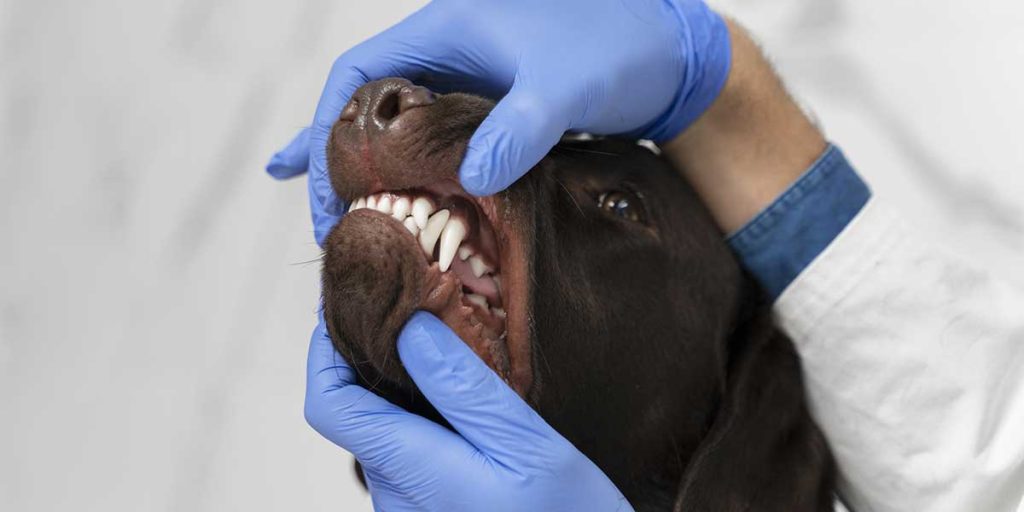
- Carefully examine the tooth, if possible: You may not be sure whether your pup chipped their tooth or not. Try to examine their mouth if you can safely do so. You’ll likely see if one of their teeth is fractured or chipped. But if you can’t tell for sure, it’s best to seek veterinary dental care either way.
- Look for signs of the broken tooth on your dog’s toys and bones: Another way to verify whether your pup injured their tooth is by examining the chew toys and bones they were recently using. You might see the tooth piece on the ground near these items or notice blood on or around the toy.
- Call your vet: Contact your vet and ask them about your next steps. They can help you determine whether the broken tooth requires an emergency visit or whether you can schedule an appointment for sometime in the next few days.
- Keep hard toys and bones away from your dog until the appointment: Help your dog avoid worsening the dental fracture by keeping any hard bones or chew toys away from them. A fractured tooth is more likely to chip and break further.
- Take your dog to the vet: Bring your dog in for an exam with your veterinarian. They will recommend the right treatment and may schedule a procedure for a later date, depending on the severity. They can also prescribe pain management for dogs who feel uncomfortable or have trouble chewing with a chipped tooth.
Chipped Tooth Treatment Options for Dogs
The treatment your vet recommends depends on the type and severity of the fracture. Possible options include:
- Dental bonding, which involves restoring the tooth with a bonding material and resin
- Root canals, which involve removing the infected pulp from the tooth and sealing it to prevent further damage
- Dental crowns, which are typically placed after root canals to restore the tooth
- Tooth extraction, which may be necessary if the damage is beyond repair
Schedule an Exam With Revel Vet Today
If you suspect your dog has a chipped tooth, reach out to Revel Vet and schedule a dental exam sooner rather than later. Your pet’s dental health contributes to their overall health and well-being. Our compassionate veterinarians will carefully assess the problem and recommend the best treatment option based on their overall health.
Contact us today at 480-701-8609 to schedule an appointment for your dog.
Frequently Asked Questions
Will a dog’s chipped tooth heal on its own?
A dog’s chipped tooth typically won’t heal on its own. Even if it is a minor chip, the surface will feel rough, making chewing uncomfortable. A vet can file it down and ensure it does not need other treatment.
Is a dog’s chipped tooth an emergency?
A chipped tooth is sometimes an emergency, especially if the pulp is exposed. Call your vet to determine whether urgent treatment is necessary.
How do you fix a dog’s chipped tooth?
If your dog has a chipped tooth, your vet might recommend a bonding procedure, root canal, crown, or extraction.