Stages of Tooth Decay in Pets
Tooth decay may initially appear to be a minor issue, but it can significantly impact your pet’s overall health and well-being. Dental infections do not mect the oral cavity; they can have systemic repercussions. When a pet’s teeth and gums become infected, the bacteria can enter the bloodstream, leading to widespread infections that can affect vital organs, including the heart, liver, and kidneys.
The Stages of Tooth Decay in Pets
The stages of tooth decay go based on a 1-5 or 0-4 system of severity. For the purposes of this content, we will use the 0-4 scale. Here’s what to expect:
Stage 0: Clean and Healthy Teeth
If your pet is identified as having stage 0 tooth decay, it means their teeth are in excellent health. At this stage, their teeth are free from significant tartar and plaque buildup. Pets with stage 0 tooth decay generally have their teeth cleaned daily using a toothbrush and toothpaste designed specifically for cats or dogs. They often have regularly scheduled visits to the veterinarian for professional cleanings to maintain optimal oral health.
You’ll notice that your pet’s gums are a healthy pink color and lie flat without signs of inflammation. While there may be some minor tartar buildup, it is minimal at stage 0. This proactive dental care helps prevent the progression of dental disease, ensuring your pet maintains a healthy mouth and overall well-being. Regular home care combined with professional dental check-ups is crucial for sustaining this level of oral health.
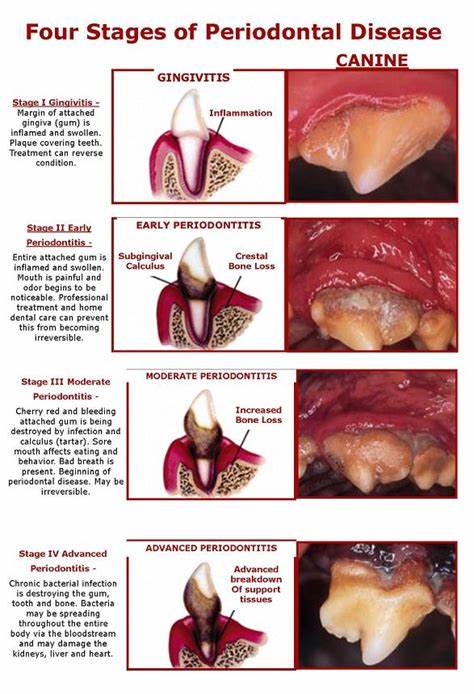
Stage 1: Gingivitis
In stage 1 of tooth decay, tartar and plaque begin to build up and you may notice a portion of your pet’s gums appear irritated and reddened.
Fortunately, at this stage, oral health can be maintained with proper cleaning.
Stage 2: Early Periodontitis
As dental decay advances, the symptoms become increasingly noticeable. During early periodontitis, pet parents may notice:
- Red and swollen gums: The gums become more inflamed and visibly redder than normal.
- Discomfort or pain: Pets may show signs of discomfort or pain, especially when eating or when their mouths are touched.
- Bleeding gums: You might notice bleeding during brushing or when your pet chews on toys or treats.
- Bad breath: Persistent bad breath (halitosis) becomes more apparent as bacteria accumulate in the mouth.
- Visible tartar buildup: Tartar begins to form on the teeth, often visible as a yellow or brown layer.
- Gum recession: The gums may start to recede, exposing more of the tooth.
- Decreased appetite: Due to oral discomfort, your pet may eat less or show reluctance to chew food.
- Behavioral changes: Pets might become more irritable or avoid activities that involve using their mouths.
Recognizing these symptoms early and seeking veterinary care can prevent the progression of gingivitis to more severe stages of periodontal disease.
Stage 3: Moderate Periodontitis
If your pet’s gingivitis is not treated, it can progress to periodontitis, a more severe condition that affects the deeper supporting structures of the teeth. Periodontitis can cause significant irreversible damage like gum recession and the formation of small pockets between the gums and teeth.
These pockets can harbor bacteria, further exacerbating the infection and potentially leading to tooth loss and systemic health issues. Early detection and treatment are essential to prevent these complications and maintain your pet’s overall oral health.
Symptoms and Potential Complications of Early Periodontitis
In stage 3, the gums are significantly more inflamed compared to stage 2. You may observe more frequent and severe bleeding, heavier tartar buildup, and greater exposure of tooth roots. Pets often experience pain while eating, and there is typically moderate bone loss.
Pus may be present around the gum line at this stage. While your pet’s teeth are not likely falling out at this stage, they may become loose.
Stage 4: Advanced Periodontitis
Advanced periodontitis is the most severe stage of periodontal disease in pets. At this point, there is extensive destruction of the tissues, ligaments, and bone supporting the teeth. As a result, the teeth become loose and may fall out, leading to painful ulcers and infections in the mouth.
In addition to your pet missing several teeth, the teeth that remain may be completely encapsulated by debris and tartar. Infected teeth and gums may also have a significant amount of debris near the gumline.
Common symptoms your pet may experience include chronic pain, difficulty eating, and weight loss. In advanced cases, bacteria from the mouth can enter the bloodstream, potentially affecting other organs and causing systemic health issues.
Impact on Gums, Teeth, and Overall Oral Structure
Advanced periodontitis in pets leads to significant bone loss in the jaw, weakening the jawbone and making it more prone to fractures and other injuries. This loss of bone density compromises the jaw’s structural integrity, potentially causing deformities or misalignment.
As the disease progresses, the jaw may become less functional, making it difficult for the pet to chew or open and close their mouth properly.
Severe bone loss and receding gums can also alter the pet’s facial appearance, causing it to look sunken or asymmetrical. Chronic inflammation and infection lead to persistent pain and swelling, while the loosening and eventual loss of teeth result in gaps and misalignment, affecting the pet’s bite and overall oral function.
Recurrent Infection is Possible at this Stage
The compromised bone and tissue structure in advanced periodontitis create an environment prone to recurrent infections, further damaging the jaw and facial bones. This chronic pain and structural issues make it difficult for the pet to eat, leading to malnutrition and weight loss.
The bacteria present in this stage may also be spreading throughout the pet’s body. Systemic infections can lead to:
- Endocarditis: When the infection spreads to the heart’s inner lining
- Sepsis: Pet’s immune system overreacts to the infection in the blood which, if left untreated, can lead to septic shock
- Osteomyelitis: Infection of the bone around the tooth
- Cavernous sinus thrombosis: Infection of the blood vessels found within the sinuses
Prevention and Treatment of Dental Disease in Pets
Preventing tooth decay in pets involves regular brushing with pet-specific products, providing a healthy diet, and offering chew toys and dental treats. Using any dental water additives your vet recommends may also help.
At home, regularly inspect your pet’s mouth for signs of dental problems and use dental wipes, gels, and sprays as part of their daily oral care routine. Consistency in these practices is key to reducing the risk of dental disease and maintaining your pet’s overall well-being.
Ultimately, routine dental check-ups and professional cleanings with your veterinarian are essential to monitor oral health and prevent periodontal disease.
Frequency of Visits for Dental Health
Dogs and cats need regular dental check-ups by a veterinarian, along with at-home dental care. The frequency of these check-ups depends on your pet’s specific needs and the condition of their teeth and gums.
For most healthy pets, an annual dental check-up is recommended. However, pets with dental issues or those at higher risk of dental problems may need to see a veterinarian more often. If your pet shows signs of dental problems, such as bad breath, difficulty eating, discolored or loose teeth, or bleeding gums, you should schedule an appointment with a veterinarian as soon as possible.
Dental problems in pets can lead to more serious health issues if left untreated, so it’s important to include regular dental care in your pet’s overall health routine. Your veterinarian can recommend a suitable schedule for dental check-ups and treatments based on your pet’s individual needs.
Caring for Your Pet’s Teeth at Revel Vet
At Revel Vet, our detailed, fear-free dental exams include a thorough evaluation of your pet’s teeth and gums, supported by X-rays to uncover any hidden issues beneath the surface. We provide dental cleanings and scaling to remove plaque and tartar buildup.
For teeth that are severely damaged or infected, we offer fear-free tooth extractions to prevent further health complications and ensure your pet’s overall well-being.
What Our Queen Creek Neighbors Say About Revel’s Veterinary Care


Schedule Regular Check-Ups
Schedule regular check-ups and cleanings at Revel Vet to maintain your pet’s dental health. Our fear-free certified team creates a comfortable, stress-free environment, ensuring your pet’s teeth are not only clean, but that your pet remains calm and comfortable throughout the experience.
Dental care may seem costly, but it’s a small investment compared to the expenses of treating advanced dental diseases, infections, or other systemic health issues that arise from neglected teeth.
For further reading, we recommend:
Stages of Pet Periodontal Disease
Revisiting Periodontal Disease in Dogs: How to Manage This New Old Problem? – PMC
Dog Owners’ Perspectives on Canine Dental Health—A Questionnaire Study in Sweden – PMC
(PDF) A review of the frequency and impact of periodontal disease in dogs
Periodontal disease in cats: back to basics–with an eye on the future