Gila Monsters as a Threat to Pets
There are only three venomous lizards on the planet and one of them calls Arizona their home– the Gila Monster. Although both dogs and cats are at risk of bites from the Gila monster, dogs actually tend to be more curious than our cats when it comes to these vibrant critters. Fortunately, there aren’t an abundant number of bite reports from pet parents, but since it’s a definite possibility, it’s important you know how to respond in case a bite occurs.
Getting to Know the Gila Monster
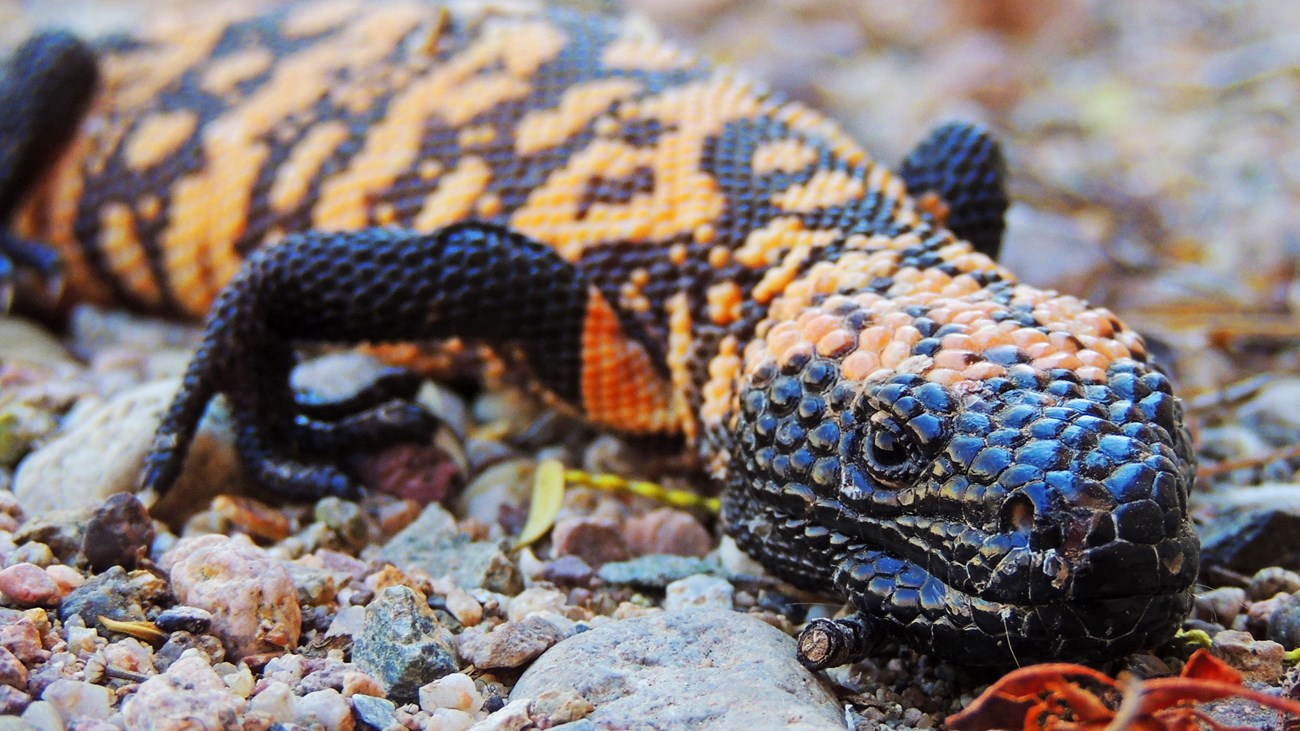
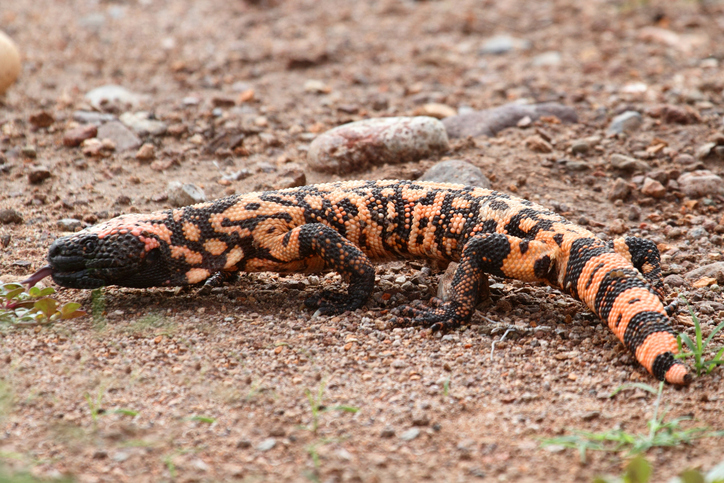
Before we do a deep dive into Gila monster bites, it’s important that you know what to look for. Gila monsters are venomous lizards known for their distinctive black and yellow or pink bead-like scales, called osteoderms, which cover their bodies except for their bellies. This coloration provides excellent camouflage in their desert habitats. They can grow up to 24 inches in length and have a thick tail used for fat storage.
Gila Monster Behavior
Gila monsters have unique behavioral traits that set them apart from other lizards. They are primarily nocturnal, spending the daylight hours hidden in burrows or under rocks to avoid the extreme desert heat. Despite their venomous bite, Gila monsters are generally slow-moving and non-aggressive, preferring to rely on their camouflage to avoid predators.
They use their keen sense of smell to locate prey, which includes eggs, small mammals, birds, and insects. When threatened, Gila monsters may hiss and show their open mouths as a warning, but they rarely attack unless provoked. This combination of nocturnal activity, reliance on camouflage, and defensive behavior helps them survive in their harsh desert environment.
Geographic Location
Gila monsters are mainly found in Arizona and Mexico, but you may also see them if you travel to California, Nevada, Utah, or New Mexico. Their name actually comes from the Gila River that flows through Arizona where they’re most commonly discovered.
Preferred Habitat
You aren’t likely to see them on a regular basis since most of their time is spent underground, but if you were to see one, it’s important for both you and your pet to admire them from afar.
They may be out and about to soak up the sun or look for food, particularly on cooler days when they won’t be scorched by the sun. And keep in mind, even though they don’t want to bite, they will if they feel threatened.
Gila Bite Effects on Pets
The bite from a Gila monster is incredibly painful. Unlike many other animals that bite and quickly let go, Gila monsters latch on firmly when they bite. This allows them to release venom into the open wound they’ve caused.
The venom is produced by glands in their lower jaw and flows into the wound through grooves in their teeth. They won’t release their grip until they no longer feel threatened, which can make the experience even more distressing for everyone involved.
Common Symptoms of Gila Monster Bites in Pets
A Gila monster’s bite is extremely painful. Unlike other animals, they don’t simply bite and release; they latch on and inject venom into the open wound they’ve created. The open wound not only allows the venom to spread more effectively but also increases the risk of infection.
Signs of Gila bites include bleeding and pain at the wound site, excessive salivation, weakness or lethargic behavior, low blood pressure, and swelling. Your pet may also experience irregular heart rhythm.
Be Proactive with Prevention
Gila Monsters will generally relocate after 24 hours at the longest. Fortunately, the fire department is often willing to help if the Gila monster doesn’t return to their burrow.
Keeping Your Pet Safe Outdoors
To keep your pets safe from Gila monsters, be sure to supervise their outdoor time. Since rattlesnakes are also a danger in Queen Creek, removing all the debris on your property could help reduce the risk of both a rattlesnake and a Gila monster bite.
Training Pets to Avoid Gila Monsters
Training your pets to avoid Gila monsters can also help keep them safe. Use similar techniques to those used in rattlesnake training, such as teaching your pet to recognize and steer clear of the scent and appearance of Gila monsters. Positive reinforcement methods, like rewarding your pet for avoiding the lizard, can be effective.
Treatment and Veterinary Care
When to Seek Veterinary Help
If you suspect your pet may have had an encounter with a Gila monster that resulted in a bite, it’s important to reach out to the vet immediately. The sooner your pet can be treated, the better the prognosis.
Contact Revel Vet for Emergency Care
Diagnosing Your Pet with the Vet
If you didn’t see it happen, it can be difficult to determine that the Gila’s venom is what is causing your pet pain. There may be multiple tests recommended for a diagnosis, including blood analyses, x-rays, urinalysis, and ultrasounds, especially if you aren’t certain your pet was bitten. An EKG may also be recommended to check for abnormal heart rhythm. Unfortunately, the only definitive way to diagnose toxicity from a lizard or snake bite is by analyzing the venom.
Treatment Options for Gila Bites
If your pet’s blood pressure is low or their heartbeat is abnormal due to a Gila monster bite, medication will likely be administered through an IV to stabilize their condition. Intravenous fluids can help maintain blood pressure and support your pet’s heart function. The wound itself must be thoroughly flushed and soaked to remove any venom and debris, reducing the risk of infection.
Pain relief options will be recommended to manage the intense pain caused by the bite. Pain medications may be combined with anti-inflammatories to reduce swelling. The wound itself will also need to be treated with antibiotics to prevent or treat any secondary bacterial infections.
Coexisting with Gila Monsters
While we should be cautious around Gila monsters, especially with our pets, their presence is actually a positive sign of a healthy desert ecosystem. Consuming the eggs of various species, they help maintain a stable population of mammals, birds, and insects. They also tend to scavenge which aids with recycling nutrients back into the environment.
Gila monsters are at-risk of being listed as an endangered species without further awareness and positive coexistence. With the appropriate preventative measures, we can live alongside these creatures. But remember, accidents happen, and if your dog or cat is bitten by one of these lizards, reach out to Revel Vet as soon as possible. And never try to grab the lizard to tear them away, this could cause more damage to your pet, or even yourself.
For further reading, check out our sources:
Gila Monster – an overview | ScienceDirect Topics
Gila Monster | San Diego Zoo Animals & Plants